


There are a number of issues with this approach to curriculum theory and practice. The followings are some of the approaches to curriculum theory and practice:
Firstly, the plan or programme assumes great importance. For example, we might look at a more recent definition of curriculum as: “A programme of activities (by teachers and pupils) designed so that pupils will attain so far as possible certain educational and other schooling ends or objectives” (Grundy 1987: 11). The problem here is that such programmes inevitably exist prior to and outside the learning experiences. This takes much away from learners. They can end up with little or no voice. They are told what they must learn and how they will do it. The success or failure of both the programme and the individual learners is judged on the basis of whether pre-specified changes occur in the behaviour and person of the learner (the meeting of behavioural objectives). If the plan is tightly adhered to, there can only be limited opportunity for educators to make use of the interactions that occur. It also can deskill educators in another way.
Second, there are questions around the nature of objectives. This model is hot on measurability. It implies that behaviour can be objectively, mechanistically measured. There are obvious dangers here – there always has to be some uncertainty about what is being measured. We only have to reflect on questions of success in our work. It is often very difficult to judge what the impact of particular experiences has been. Sometimes it is years after the event that we come to appreciate something of what has happened. For example, most informal educators who have been around a few years will have had the experience of an ex-participant telling them in great detail about how some forgotten event (forgotten to the worker that is) brought about some fundamental change. Yet there is something more.
Third, there is a real problem when we come to examine what educators actually do in the classroom, for example. much of the research concerning teacher thinking and classroom interaction and curriculum innovation has pointed to the lack of impact on the actual pedagogic practice of objectives (Stenhouse 1974; and Cornbleth 1990, for example). One way of viewing this is that teachers simply get it wrong – they ought to work with objectives.
The difficulties that educators experience with objectives in the classroom may point to something inherently wrong with the approach – that it is not grounded in the study of educational exchanges. It is a model of curriculum theory and practices largely imported from technological and industrial settings. Fourth, there is the problem of unanticipated results. The focus on pre-specified goals may lead both educators and learners to overlook learning that is occurring as a result of their interactions, but which is not listed as an objective. The apparent simplicity and rationality of this approach to curriculum theory and practice, and the way in which it mimics industrial management have been powerful factors in its success.
A further appeal has been the ability of academics to use the model to attack teachers: I believe there is a tendency, recurrent enough to suggest that it may be endemic in the approach, for academics in education to use the objectives model as a stick with which to beat teachers. ‘What are your objectives?’ is more often asked in a tone of a challenge than one of interested and helpful inquiry. The demand for objectives is a demand for justification rather than a description of ends… It is not about curriculum design, but rather an expression of irritation in the problems of accountability in education. (Stenhouse 1974: 77)

In what follows we are going to look at four ways of approaching curriculum theory and practices are:
1. Curriculum as a body of knowledge to be transmitted.
2. Curriculum as an attempt to achieve certain ends in students – product.
3. Curriculum as a process.
4. Curriculum as praxis.
It is helpful to consider these ways of approaching curriculum theory and practice in the light of Aristotle’s influential categorization of knowledge into three disciplines: the theoretical, the productive and the practical. Here we can see some clear links – the body of knowledge to be transmitted in the first is that classically valued as ‘the canon’; the process and praxis models come close to practical deliberation, and the technical concerns of the outcome or product model mirror elements of Aristotle’s characterization of the productive. More this will be revealed as we examine the theory underpinning individual models.
Curriculum as a syllabus to be transmitted Many people still equate a curriculum with a syllabus. The syllabus, naturally, originates from Greek (although there was some confusion in its usage due to early misprints). Basically, it means a concise statement or table of the heads of a discourse, the contents of a treatise and the subjects of a series of lectures. In the form that many of us will have been familiar with it is connected with courses leading to examinations – teachers talk of the syllabus associated with, say, the Cambridge Board French GSCE exam. What we can see in such documents is a series of headings with some additional notes, which set out the areas that may be examined. A syllabus will not generally indicate the relative importance of its topics or the order in which they are to be studied. In some cases as Curzon (1985) points out, those who compile a syllabus tend to follow the traditional textbook approach of an ‘order of contents’, or a pattern prescribed by a ‘logical’ approach to the subject, or – consciously or unconsciously – the shape of a university course in which they may have participated. Thus, an approach to curriculum theory and practice which focuses on the syllabus is only concerned with content. A curriculum is a body of knowledge content and/or subjects. Education in this sense is the process by which these are transmitted or ‘delivered’ to students by the most effective methods that can be devised (Blenkin et al 1992: 23). Where people still equate curriculum with a syllabus they are likely to limit their planning to a consideration of the content or the body of knowledge that they wish to transmit. ‘It is also because this view of the curriculum has been adopted that many teachers in primary schools’, Kelly (1985: 7) claims, ‘have regarded issues of curriculum as of no concern to them since they have not regarded their task as being to transmit bodies of knowledge in this manner.
Curriculum as a product The dominant modes of describing and managing education are today couched in the productive form. Education is most often seen as a technical exercise. Objectives are set, a plan drawn up and then applied and the outcomes (products) measured. It is a way of thinking about education that has grown in influence in the United Kingdom since the late 1970s with the rise of vocationalism and the concern with competencies. Thus, in the late 1980s and the 1990s, many of the debates about the National Curriculum for schools did not so much concern how the curriculum was thought about as to what its objectives and content might be.
It is the work of two American writers Franklin Bobbitt (1918; 1928) and Ralph W. Tyler (1949) that dominate theory and practice within this tradition. In The Curriculum Bobbitt writes as follows: The central theory [of curriculum] is simple. Human life, however varied, consists of the performance of specific activities. Education that prepares for life is one that prepares definitely and adequately for these specific activities. However numerous and diverse they may be for any social class they can be discovered. This requires only that one go out into the world of affairs and discover the particulars of which their affairs consist.
These will show the abilities, attitudes, habits, appreciations and forms of knowledge that men need. These will be the objectives of the curriculum. They will be numerous, definite and particularized. The curriculum will then be that series of experiences that children and youth must have by way of obtaining those objectives. (1918: 42) This way of thinking about curriculum theory and practise was heavily influenced by the development of management thinking and practice. The rise of ‘scientific management’ is often associated with the name of its main advocate F. W. Taylor. Basically what he proposed was a greater division of labour with jobs being simplified; an extension of managerial control over all elements of the workplace; and cost accounting based on the systematic time-and-motion study.
All three elements were involved in this conception of curriculum theory and practice. For example, one of the attractions of this approach to curriculum theory was that it involved detailed attention to what people needed to know in order to work, live their lives and so on. A familiar, and more restricted, example of this approach can be found in many training programmes, where particular tasks or jobs have been analyzed – broken down into their component elements – and lists of competencies drawn up. In other words, the curriculum was not to be the result of ‘armchair speculation’ but the product of systematic study. Bobbitt’s work and theory met with mixed responses.
ome criticisms were made, and can continue to be made, of such approaches are that there is no social vision or programme to guide the process of curriculum construction. As it stands it is a technical exercise. However, it wasn’t criticisms such as this that initially limited the impact of such curriculum theory in the late 1920s and 1930s. Rather, the growing influence of ‘progressive’, child-centred approaches shifted the ground to more romantic notions of education. Bobbitt’s long lists of objectives and his emphasis on order and structure hardly sat comfortably with such forms. The Progressive movement lost much of its momentum in the late 1940s in the United States and from that period the work of Ralph W. Tyler, in particular, has made a lasting impression on curriculum theory and practice. He shared Bobbitt’s emphasis on rationality and relative simplicity. His theory was based on four fundamental questions:
1. What educational purposes should the school seek to attain?
2. What educational experiences can be provided that is likely to attain these purposes?
3. How can these educational experiences be effectively organized?
4. How can we determine whether these purposes are being attained? (Tyler 1949: 1)
Like Bobbitt, he also placed an emphasis on the formulation of behavioural objectives. Since the real purpose of education is not to have the instructor perform certain activities but to bring about significant changes in the students’ pattern of behaviour, it becomes important to recognize that any statements of objectives of the school should be a statement of changes to take place in the students. (Tyler 1949: 44) We can see how these concerns translate into a nicely-ordered procedure: one that is very similar to the technical or productive thinking set out below.
Step 1: Diagnosis of need
Step 2: Formulation of objectives
Step 3: Selection of content
Step 4: Organization of content
Step 5: Selection of learning experiences
Step 6: Organization of learning experiences
Step 7: Determination of what to evaluate and of the ways and means of doing it (Taba 1962).
The attraction of this way of approaching curriculum theory and practise is that it is systematic and has considerable organizing power. Central to the approach is the formulation of behavioural objectives – providing a clear notion of the outcome so that content and method may be organized and the results evaluated.
Curriculum as a process We have seen that the curriculum as a product model is heavily dependent on the setting of behavioural objectives. The curriculum, essentially, is a set of documents for implementation. Another way of looking at curriculum theory and practice is via the process. In this sense curriculum is not a physical thing, but rather the interaction of teachers, students and knowledge. In other words, the curriculum is what actually happens in the classroom and what people do to prepare and evaluate. What we have in this model is a number of elements in constant interaction.
It is an active process and links with the practical form of reasoning set out by Aristotle. Perhaps the two major things that set this apart from the model for informal education are first, the context in which the process occurs (‘particular schooling situations’); and second, the fact that teachers enter the classroom or any other formal educational setting with a more fully worked-through idea of what is about to happen. This form of words echoes those of Lawrence Stenhouse (1975) who produced one of the best-known explorations of a process model of curriculum theory and practice. He defined curriculum tentatively: ‘A curriculum is an attempt to communicate the essential principles and features of an educational proposal in such a form that it is open to critical scrutiny and capable of effective translation into practice. He suggests that a curriculum is rather like a recipe in cookery. That’s a curriculum that should be grounded in practice. It is an attempt to describe the work observed in classrooms that are adequately communicated to teachers and others.
Finally, within limits, a recipe can be varied according to taste. So can a curriculum. (Stenhouse 1975: 4-5) Stenhouse shifted the ground a little bit here. He was not saying that curriculum is the process, but rather the means by which the experience of attempting to put an educational proposal into practice is made available. More specifically, if a curriculum is a process then the word curriculum is redundant because the process would do very nicely! The simple equation of curriculum with the process is a very slap-happy basis on which to proceed. We also need to reflect on why curriculum theory and practice came into use by educators (as against policy-makers). It was essentially as a way of helping them to think about their work before, during and after interventions; as a means of enabling educators to make judgments about the direction their work was taking. This is what Stenhouse was picking upon.
Curriculum as praxis is, in many respects, a development of the process model. While the process model is driven by general principles and places an emphasis on judgment and meaning-making, it does not make explicit statements about the interests it serves. It may, for example, be used in such a way that does not make continual reference to collective human well-being and to the emancipation of the human spirit. The praxis model of curriculum theory and practise brings these to the centre of the process and makes an explicit commitment to emancipation. Thus action is not simply informed, it is also committed.
It is praxis. Critical pedagogy goes beyond situating the learning experience within the experience of the learner: it is a process, which takes the experiences of both the learner and the teacher and, through dialogue and negotiation, recognizes them both as problematic. It allows, indeed encourages, students and teachers together to confront the real problems of their existence and relationships. When students confront the real problems of their existence they will soon also be faced with their own oppression (Grundy 1987:105). We can amend our ‘curriculum as process’ model to take account of these concerns. In this approach, the curriculum itself develops through the dynamic interaction of action and reflection.
That is, “the curriculum is not simply a set of plans to be implemented, but rather is constituted through an active process in which planning, acting and evaluating are all reciprocally related and integrated into the process”. (Grundy 1987: 115). How might we recognize this? First, we should be looking for a practice that does not focus exclusively on individuals but pays careful attention to collective understandings and practices and to structural questions. For example, in sessions that seek to explore the experiences of different cultural and racial groups in society, we could be looking to see whether the direction of the work took people beyond a focus on individual attitudes.
Second, we could be looking for a commitment expressed in action to the exploration of educators’ values and their practice. Are they, for example, able to say in a coherent way what they think makes for human well-being and link this with their practice? We could also be looking for certain values – especially an emphasis on human emancipation.
Third, we could expect practitioners committed to praxis to be exploring their practice with their peers. They would be able to say how their actions with respect to particular interventions reflected their ideas about what makes for the good and to say what theories were involved.
Curriculum and context To round off this discussion of the curriculum we do need to pay further attention to the social context in which it is created. One criticism that has been made of the praxis model (especially as it is set out by Grundy) is that it does not place a strong enough emphasis upon context. This is a criticism that can also be laid at the door of the other approaches. In this respect, the work of Catherine Cornbleth (1990) is of some use. She sees curriculum as a particular type of process. Curriculum for her is what actually happens in classrooms, that is, ‘an ongoing social process comprised of the interactions of students, teachers, knowledge and milieu’ (1990: 5).
In contrast, Stenhouse defines curriculum as the attempt to describe what happens in classrooms rather than what actually occurs. Cornbleth further contends that curriculum as practice cannot be understood adequately or changed substantially without attention to its setting or context. The curriculum is contextually shaped. While I may quibble about the simple equation of curriculum with the process, what Cornbleth does by focusing on the interaction is to bring out the significance of context. First, by introducing the notion of milieu into the discussion of the curriculum she again draws attention to the impact of some factors that we have already noted. Of especial significance here are examinations and the social relationships of the school – the nature of the teacher-student relationship, the organization of classes, streaming and so on. These elements are what are sometimes known as the hidden curriculum.
This was a term credited to Philip W. Jackson (1968) but it had been present as an acknowledged element in education for some time before. For example, John Dewey in Experience and Education referred to the ‘collateral learning’ of attitudes that occur in schools, and that may well be of more long-range importance than the explicit school curriculum (1938: 48). A fairly standard (product) definition of the ‘hidden curriculum’ is given by Vic Kelly. He argues it is those things which students learn, ‘because of the way in which the work of the school is planned and organized but which are not in themselves overtly included in the planning or even in the consciousness of those responsible for the school arrangements (1988: 8).
The learning associated with the ‘hidden curriculum’ is most often treated in a negative way. It is learning that is smuggled in and serves the interests of the status quo. The emphasis on regimentation, on bells and time management, and on streaming are sometimes seen as preparing young people for the world of capitalist production. What we do need to recognize is that such ‘hidden’ learning is not all negative and can be potentially liberating. ‘In so far as they enable students to develop socially valued knowledge and skills… or to form their own peer groups and subcultures, they may contribute to personal and collective autonomy and to possible critique and challenge of existing norms and institutions’ (Cornbleth 1990: 50). What we also need to recognize is that by treating curriculum as a contextualized social process, the notion of hidden curriculum becomes rather redundant. If we need to stay in touch with the milieu as we build curriculum then it is not hidden but becomes a central part of our processes.
Second, by paying attention to the milieu, we can begin to get a better grasp of the impact of the structural and socio-cultural process on teachers and students. As Cornbleth argues, economic and gender relations, for example, do not simply bypass the systemic or structural context of curriculum and enter directly into classroom practice. They are mediated by intervening layers of the education system (Cornbleth 1990: 7). Thus, the impact of these factors may be quite different to that expected.
Third, if curriculum theory and practice are inextricably linked to milieu then it becomes clear why there have been problems about introducing it into non-schooling contexts like youth work; and it is to this area which we will now turn.
Conclusion
We have explored four different approaches to curriculum theory and practice. They are:
-Curriculum as a body of knowledge to be transmitted.
-Curriculum as an attempt to achieve certain ends in students – product.
-Curriculum as a process.
-Curriculum as praxis.
In a number of respects these different bodies of curriculum theory and practice link to the four main forces in North American curriculum-making in the twentieth century: the liberal educators; the scientific curriculum makers; the developmental/person-centred; and the social meliorate (those that sought more radical social change-after Kliebart 1987). We should not push the similarities too far – but there are some interesting overlaps – and this does alert us both to the changing understanding and to shifting policy orientations over time. For the moment, we have to operate within a policy environment that prizes the productive and technical. Furthermore, the discourse has become so totalizing that forms of education that do not have a curricula basis are squeezed. The temptation is always there to either be colonized by curriculum theory or adopt ways of describing a practice that does not make sense in terms of the processes and commitments involved.
About the Author
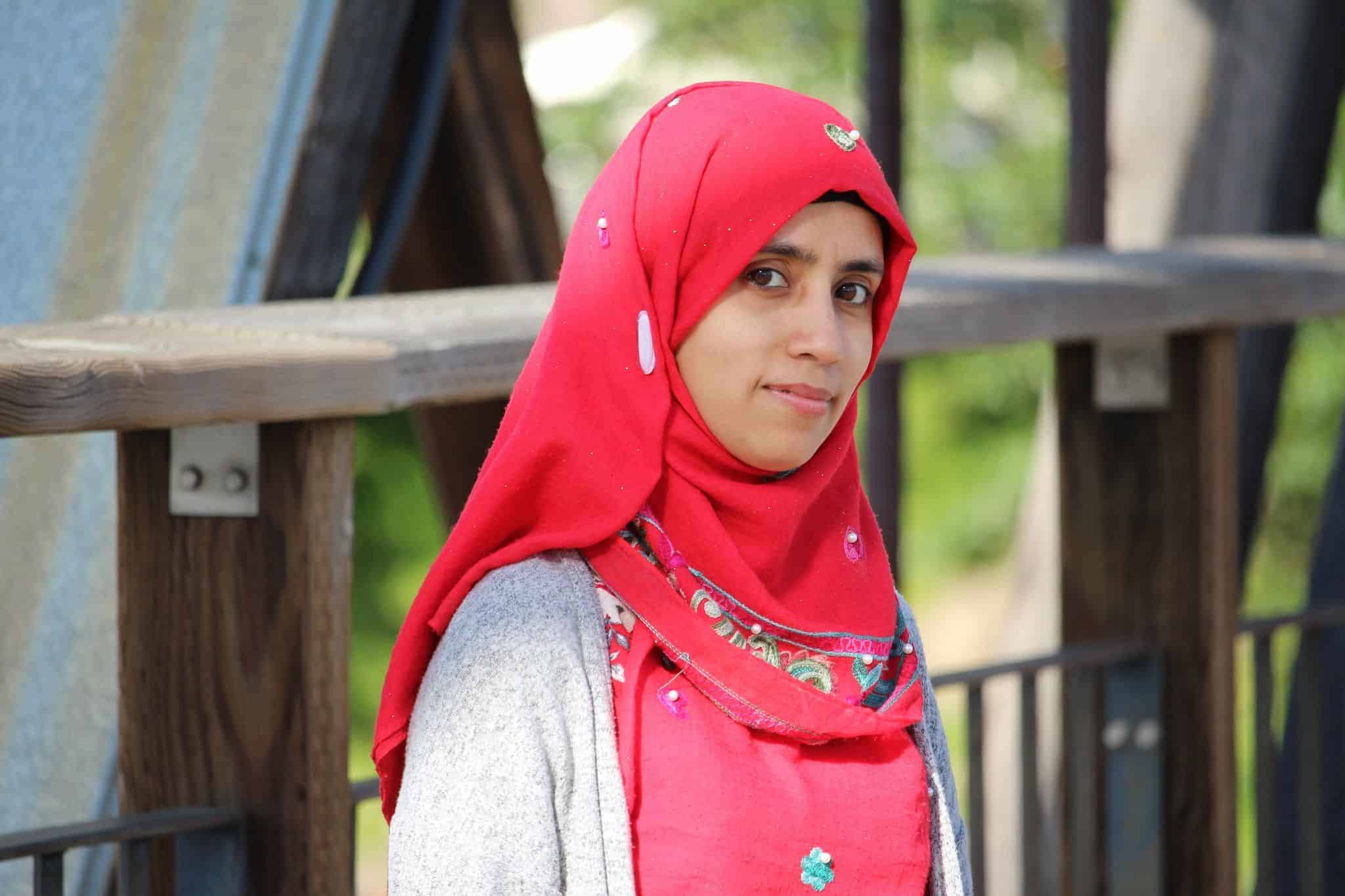
Tamanna Kalim is working in the developmental sector (Health and Education) for over 10 years in different multicultural settings, possess post-graduation both in Public Health (MPH) and Education (MEd). Her current position is Clinical Administrator in Vancouver, BC, Canada.